

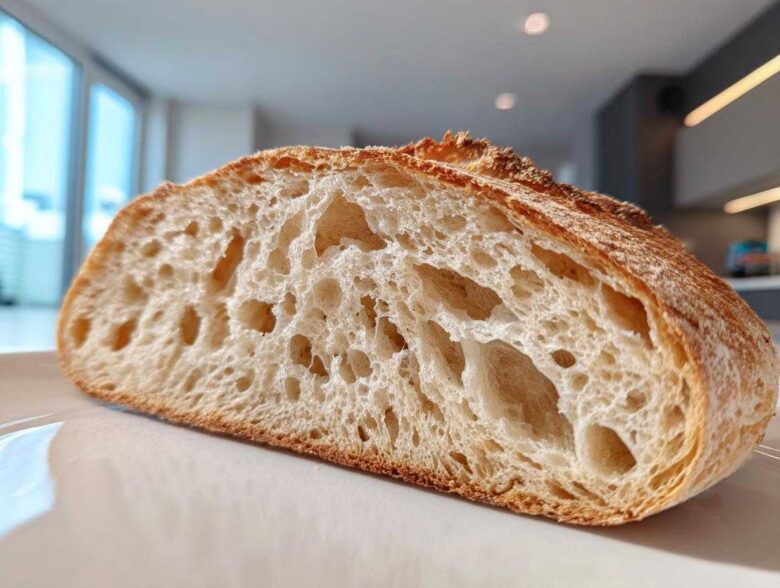
Oh my gosh, are you ready to meet the easiest, most glorious bread you’ll ever bake? We all love the shatter of a perfectly toasted English muffin, right? That beautiful landscape of nooks and crannies ready to soak up butter or jam? Well, I’ve finally cracked the code for getting that exact texture, but baked right in a simple loaf pan—no griddling required! This is my famous No-Knead English Muffin Bread, and trust me, after years of fiddling with high-hydration doughs in my own kitchen, this method is foolproof.
Forget wrestling with dough; this recipe relies on time, not muscle. After many tasty (and occasionally flat) experiments, I figured out that a very long, slow rise is what builds those airy pockets naturally. It cuts your hands-on work down to maybe ten minutes total. You get rustic, artisan quality, but with the familiar, comforting flavor of an English muffin. It’s truly the best of both worlds! If you want to know more about my baking journey, you can always check out my About Me page for my story.
Why This No-Knead English Muffin Bread is a Game Changer
What’s not to love about this loaf? It takes all the best parts of my baking experiments and puts them into one straightforward recipe. You get unbelievable flavor without any hassle, which is what we all want when baking at home, right?
- It’s truly a Quick bread without kneading. Seriously, just stir and wait!
- This is the ultimate Easy no knead bread recipe for busy weeknights.
- You get that classic, bubbly interior without ever touching a mixer.
Achieving True English Muffin Texture
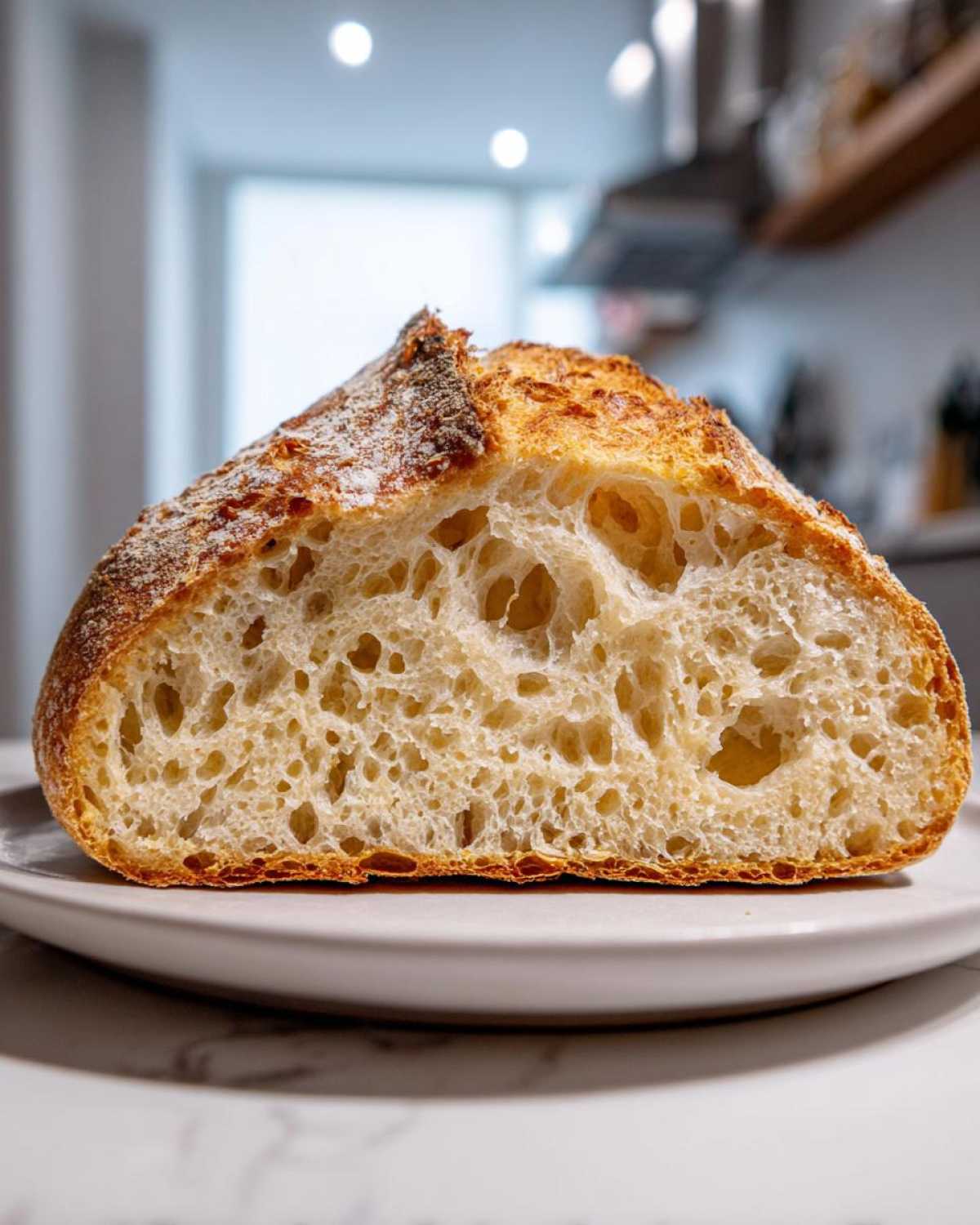
The secret weapon here is the super high water content in the dough. Because we aren’t kneading out all that moisture, when it bakes, that steam creates those iconic bubbles and holes. That’s precisely how you get that amazing English muffin texture bread we crave. You’ll see them pop up when you slice it!
Minimal Hands-On Time for Flavorful No-Knead English Muffin Bread
This recipe shines because it’s mostly hands-off, which means the yeast has time to develop incredible, deep flavor. It turns into an amazing Overnight no knead bread option. You mix it at night, and you wake up to dough that’s practically ready to bake. That’s the magic of the No-Knead English Muffin Bread!
If you’re looking for more general baking insights, you can always peek at my latest blog posts for inspiration!
Gathering Ingredients for Your No-Knead English Muffin Bread
The beautiful thing about this recipe is how simple the ingredient list is. You likely have most of what you need in your pantry right now! We’re keeping things classic here because the long, slow fermentation does most of the heavy lifting for flavor, so we don’t need a ton of extra stuff.
You’ll need:
- 3 cups all-purpose flour (Good quality stuff makes a difference, trust me!)
- 1 1/2 teaspoons instant dry yeast (This is key for no-knead; active dry behaves differently.)
- 1 1/2 teaspoons salt (Don’t skip this, it controls the yeast and adds flavor.)
- 1 1/2 cups warm water (About 105-115°F—it should feel slightly warmer than warm bath water. Too hot, and you kill your yeast friends! I always check with my finger first.)
- 2 tablespoons melted butter, plus more for greasing (Melted butter is what gives this loaf a slightly richer crumb than a normal no-knead.)
When you are ready to bake, make sure you have plenty of butter ready for the pan. If you’re grabbing ingredients for breakfast baking every morning, you can browse my full collection of breakfast recipes!
Step-by-Step Instructions for No-Knead English Muffin Bread
This is where the magic happens, and honestly, it’s shockingly simple. You are trading arm strength for time, which is the best trade-off in my book. We are taking our time so the yeast can do the hard work developing those deep, complex flavors we associate with artisan baking. If you’ve ever felt intimidated by yeast previously, this recipe—which is a great first step for learning baking with yeast for beginners—will change your mind!
Mixing the Shaggy Dough and Initial Rise
First, grab your big bowl and whisk the flour, salt, and yeast together really well. Then, pour in that warm water and the melted butter from your ingredient list. Now, you just mix it! Use a wooden spoon or a sturdy spatula until everything looks messy and sticky—we call this a shaggy dough. Stop mixing immediately when you see no dry flour spots left. Do not knead! Cover that bowl tightly and let it chill out for 12 to 18 hours at room temperature. If you want an even deeper flavor, you can let it rest in the fridge for up to a day; this makes it a wonderful Flavorful slow rise bread.
Shaping and Second Proof for No-Knead English Muffin Bread
Once your dough has seriously bubbled up, it’s time for a little shaping—but gentle shaping only! Lightly flour your counter. Scrape the dough out carefully and gently fold it over itself just two or three times to create a rough ball. We are not punching air out; we are just giving it a little structure. Rub your loaf pan down really well with butter, then sneak your dough ball in, seam-side down. Cover it loosely and let it proof for about 45 minutes to an hour. You know it’s ready when it crowns about an inch over the top edge of the pan. This finish is crucial for perfect No-Knead English Muffin Bread structure!
Baking Your Homemade English Muffin Loaf
About twenty minutes before that second rise is done, crank your oven up to 375°F (190°C). You want it roaring hot when the loaf goes in! Bake it for 30 to 35 minutes. You’re looking for a deep golden-brown color on top. I always check the temperature—it should hit 200°F inside for a perfectly baked loaf. Immediately after it comes out, turn it out onto a wire rack. This is so important for a crisp crust on your Homemade English muffin loaf!
Tips for Perfect No-Knead English Muffin Bread Every Time
Even in a no-knead recipe, a few little tricks can take your loaf from good to absolutely legendary. These are the bits of wisdom I picked up after my first few attempts at these long-fermented doughs. My biggest rule? Don’t rush the cooling process!
If you slice this bread when it’s even slightly warm, you’ll squish those precious nooks and crannies into a gummy layer, and that’s a tragedy. Let it sit completely undisturbed on the wire rack for at least two hours. Trust me on this one; patience pays off hugely here.
Also, when handling the dough for the second rise, use floured hands or a bench scraper—it’s going to be tacky! Don’t add too much extra flour when you’re shaping it in the pan, or you’ll end up with a denser loaf, which ruins the English muffin effect. These are just some of the Rustic no knead baking tips that make the difference between a decent loaf and one you have to brag about! If you want something amazing to dip this bread into after it cools, check out my simple olive oil bread dip; it’s fantastic.
Ingredient Notes and Substitutions for Your Loaf Pan Bread Tutorials
Okay, let’s talk about what goes into this bread and why those specific choices matter for the no-knead success. The biggest question I always get is about the yeast. We use instant dry yeast here because it’s stronger and doesn’t need to be ‘proofed’ separately in water first. That simplifies things immensely when you’re just mixing everything in one shot for these Loaf pan bread tutorials.
If you only have active dry yeast, you can use it! Just dissolve it in the warm water for about five minutes first until it gets foamy. But remember, this dough is highly hydrated, which means if you switch to whole wheat flour, you might need an extra splash of water because whole wheat soaks up liquid like a sponge. Keep your ratios close to the recipe, though, because we rely on that high hydration for the nooks!
For an extra treat, I once experimented by swapping about a quarter cup of the white flour for some finely ground yellow cornmeal—it gave the crumb a wonderful, slightly grainy texture reminiscent of some corn-based baked goods. You can see how I play with these kinds of additions in my sourdough cornbread recipe if you’re looking for ideas!
Serving Suggestions for No-Knead English Muffin Bread
Okay, the hard part is over, and your beautiful loaf is cool! Now comes the best part: eating it. Please, please, please slice this bread with a serrated knife and then pop those slices into your toaster. That toasting step is non-negotiable—it awakens all those internal nooks and crannies we worked so long to create. Once perfectly golden, slather it with butter!
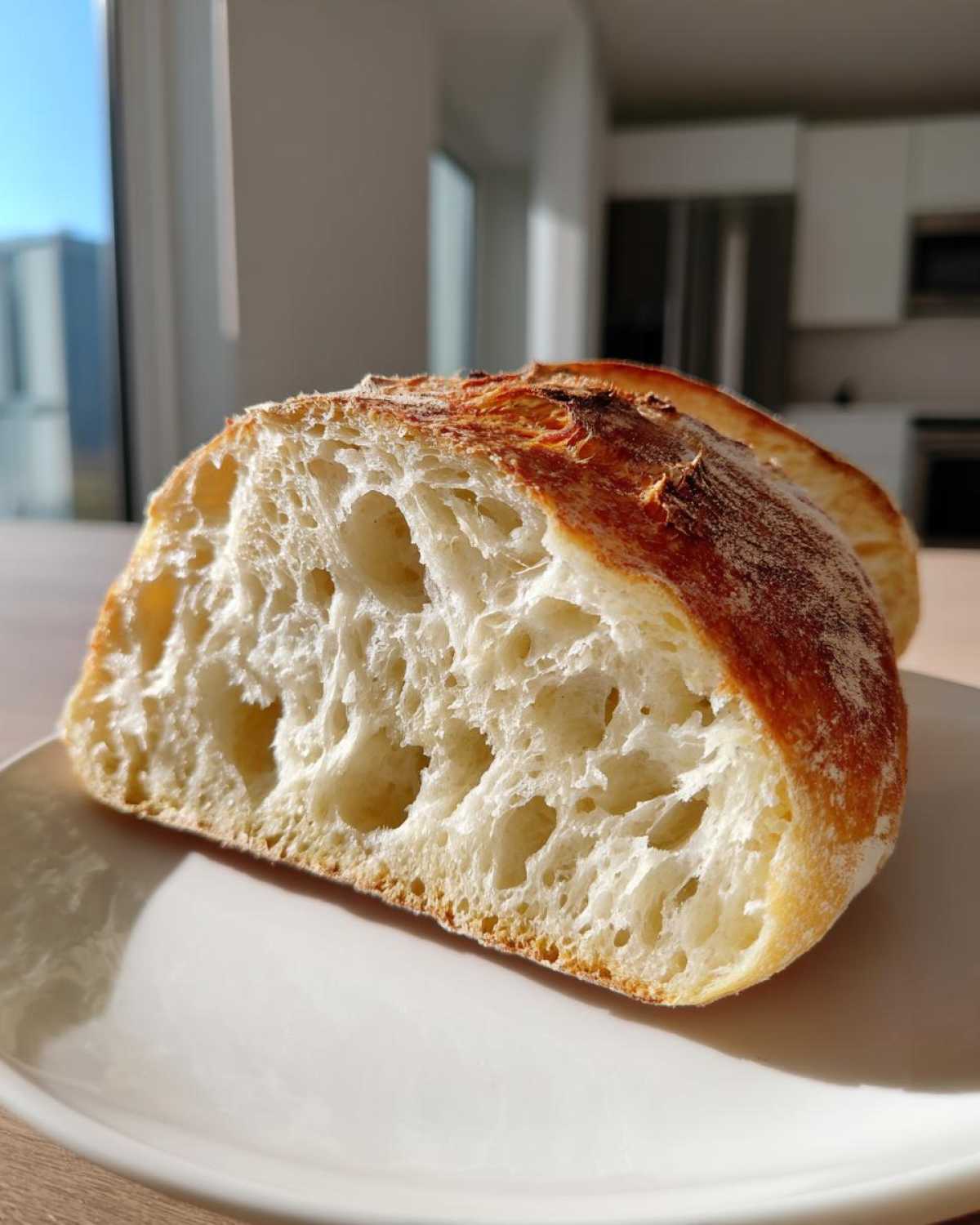
My absolute favorite way to eat this is with a smear of my homemade cinnamon butter; the sweet spice melts right into all the nooks. But don’t stop there! This loaf is sturdy enough to be the best breakfast sandwich bread you’ve ever had, holding up eggs and bacon perfectly. Jam, honey, or just a drizzle of maple syrup works wonders too!
Storage and Reheating Instructions for No-Knead English Muffin Bread
Since this bread has such high moisture content from that long fermentation, it stays surprisingly fresh! The best thing you can do is wait until it’s totally cool, then slice only what you plan to eat that day. Store the rest of the loaf tightly wrapped in plastic wrap or foil at room temperature for two or three days. Honestly, microwaving never works well for bread; it softens the crust too much. Always, always reheat your slices in a toaster or under the broiler until crispy again. That’s the only way to bring those nooks back to life!
Common Questions About This Easy No Knead Bread Recipe
I totally get it; when you’re dealing with a dough that sits around for 18 hours, you’re bound to have a few questions pop up! I wrote this recipe based on my extensive testing, so hopefully, these answers will give you confidence as you start your baking journey. If I missed something, you can always reach out on my contact page!
Can I use active dry yeast instead of instant yeast?
Yes, you absolutely can! Active dry yeast just needs a little introduction before baking. You’ll take those 1 1/2 teaspoons of active dry yeast and whisk them into your warm water (make sure the temperature is right around 110°F) and let it sit for about five to ten minutes until it gets foamy. Once it’s foamy, you pour that mixture—yeast and all—into your dry ingredients. It works just as well for this Easy no knead bread recipe!
Why is my dough so sticky? Is it ruined?
Don’t panic! Sticky is exactly what we want. Remember, we aren’t kneading any gluten structure out; we are relying on a high amount of water—that’s what creates those amazing holes! If your dough is so wet that you simply can’t scrape it out of the bowl, you can nudge it along by stirring in just one extra tablespoon of flour at a time until it forms a truly shaggy mass. Less is more, though!
How much longer should I bake if I use a glass pan?
This is an important tip, especially when baking this No-Knead English Muffin Bread! Glass pans conduct heat much faster than metal pans. If you use a glass 9×5 pan, you should reduce your oven temperature by 25°F (so bake at 350°F instead of 375°F) and keep an eye on it. It might finish five minutes sooner, so start checking at the 25-minute mark to prevent burning the bottom.
What happens if I let the dough cold ferment for 36 hours instead of 18?
You are going for maximum flavor! If you leave the dough in the fridge for 36 hours, you’ll develop even more complex, slightly sour notes—almost like a mild sourdough starter flavor mixed in. However, when you take it out, you’ll need to let it warm up completely on the counter (maybe 3–4 more hours) before you gently fold it and put it in the pan for the second rise. It’ll be worth the wait, I promise!
Estimated Nutritional Data for No-Knead English Muffin Bread
I always get asked about the nutrition facts, and while baking for flavor is my main goal, knowing the numbers helps! Here’s what my testing generally shows for a single slice, but remember these values can shift based on the exact brand of flour and butter you decide to use. These are just solid estimates.
- Serving Size: 1 slice
- Calories: 180
- Fat: 2g
- Carbohydrates: 36g
- Protein: 5g
For a full breakdown and more context on how these numbers are calculated, make sure you check out my official nutritional disclaimer before leaning on these figures!
PrintEasy No-Knead English Muffin Bread

Make a loaf with the classic nooks and crannies texture of English muffins using a simple, no-knead method that requires only a long fermentation time.
- Prep Time: 10 min
- Cook Time: 35 min
- Total Time: 13 hours 55 min
- Yield: 1 loaf
- Category: Breakfast
- Method: Baking
- Cuisine: American
- Diet: Vegetarian
Ingredients
- 3 cups all-purpose flour
- 1 1/2 teaspoons instant dry yeast
- 1 1/2 teaspoons salt
- 1 1/2 cups warm water (about 105-115°F)
- 2 tablespoons melted butter, plus more for greasing
Instructions
- In a large bowl, whisk together the flour, yeast, and salt.
- Pour in the warm water and melted butter. Mix with a wooden spoon until just combined into a shaggy, sticky dough. Do not overmix.
- Cover the bowl tightly with plastic wrap. Let the dough rest at room temperature for 12 to 18 hours, or until it has doubled in size and shows many bubbles.
- Lightly grease a standard 9×5 inch loaf pan with butter.
- Gently scrape the dough out onto a lightly floured surface. Fold the dough over itself two or three times to form a rough ball shape. Do not punch down or knead.
- Place the dough into the prepared loaf pan, seam side down.
- Cover the pan loosely with plastic wrap or a clean kitchen towel. Let it rise again in a warm spot for 45 to 60 minutes, or until the dough has crowned about 1 inch above the rim of the pan.
- Preheat your oven to 375°F (190°C) during the last 20 minutes of the second rise.
- Bake for 30 to 35 minutes, or until the top is golden brown and the internal temperature reaches 200°F (93°C).
- Remove the loaf from the pan immediately and cool completely on a wire rack before slicing.
Notes
- For a more pronounced English muffin flavor, you can let the mixed dough rest in the refrigerator for 12 to 24 hours (cold fermentation) instead of the initial room temperature rise.
- Slice the cooled loaf with a serrated knife. Toast slices before serving to maximize the nooks and crannies.
- This bread is best served toasted with butter, jam, or used for breakfast sandwiches.
Nutrition
- Serving Size: 1 slice
- Calories: 180
- Sugar: 1
- Sodium: 350
- Fat: 2
- Saturated Fat: 1
- Unsaturated Fat: 1
- Trans Fat: 0
- Carbohydrates: 36
- Fiber: 1
- Protein: 5
- Cholesterol: 0