

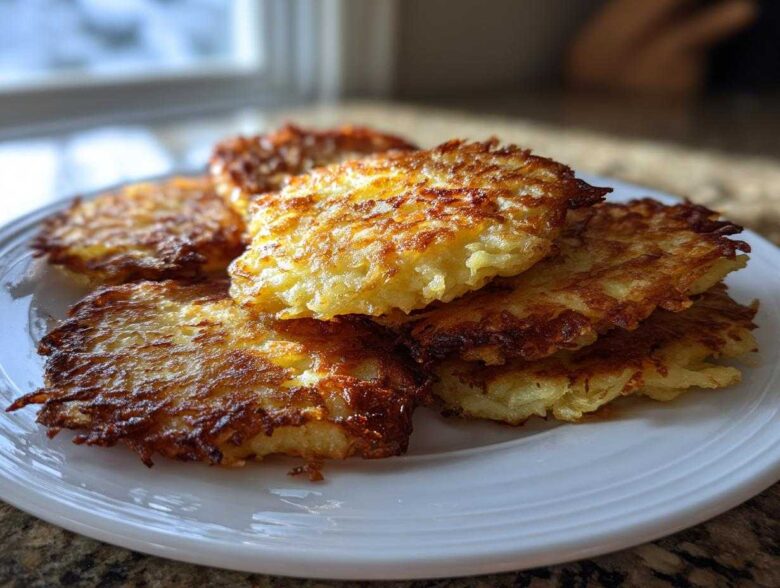
Oh my gosh, let’s talk about crunch. When I bite into a perfect potato latke, I want that shatteringly crisp edge that gives way to that savory, hot center. For years, I struggled with greasy, floppy pancakes that wilted the second they hit the plate. It was heartbreaking! But trust me, I finally cracked the code. I figured out what my Bubbe always insisted upon, and now I can guarantee you the best potato latkes—truly golden brown ones that refuse to get soggy. It all comes down to mastering one simple, messy step: the squeeze. Once you nail the moisture removal, you’re halfway to potato heaven.
Why This Crispy Potato Latkes Recipe Works (Expert Tips)
The absolute cornerstone of these savory potato pancakes isn’t the flour or the eggs; it’s the potato itself! I lean heavily on Russet potatoes for this recipe, and I really hope you do too. They have way more starch than those waxy red potatoes, and that starch is what turns into those beautiful, crispy edges when they hit the hot oil. Don’t even think about trying to use the dull side of a food processor blade either; you need that coarse grating action! Learning the right grating technique is what separates a good latke from a life-changing one. I always make sure my privacy settings allow me to share real, tested knowledge, and you can check out exactly how we handle your data right here: our site standards.
The Secret to Golden Brown Latkes: Moisture Extraction
Okay, this part is messy, but it makes or breaks everything. If you skip or rush this, you end up with hot, greasy soup instead of true fried potato fritters. After you grate the Russets and the onion—and yes, you grate them together!—you must get every last drop of water out. I grab a clean, thin kitchen towel, pile all that grated mess right in the middle, and then I twist. Twist it like you mean it! You have to put some elbow grease into it until almost nothing drips out anymore. Seriously, watch how much liquid comes out, it’s shocking! This technique creates dry, starchy shreds that fry up perfectly, giving you those gorgeous, lacy edges.
Gathering Ingredients for Authentic Potato Latkes
Getting the right components is the start of making incredible classic latkes. We need three large Russet potatoes, which should weigh out to about a pound and a half total. Don’t forget that one medium yellow onion for that essential savory bite! For binding, gently beat two large eggs and have about 1/4 cup of all-purpose flour ready. We season simply: one teaspoon of salt and just a pinch—1/4 teaspoon—of black pepper. When it comes time to fry these beauties, you absolutely must have about a half-inch depth of neutral oil, like vegetable or canola, shimmering in your pan. These simple ingredients transform when treated right.
Ingredient Substitutions for Your Potato Latkes
Now, if you find yourself short on flour, you can totally swap it for matzo meal cup-for-cup. It adds a slightly different, drier texture, but it works! If you’re out of vegetable oil, any high-heat oil is fine, but I’d avoid olive oil for frying as the flavor can get a little sharp. For the potatoes, if you must substitute Russets, use Yukon Golds, but know you might have to squeeze out just a tiny bit more liquid than usual. Keep it simple; the magic is mostly in the technique, not complicated additives.
Step-by-Step Instructions for Perfect Potato Latkes
Alright, now we get to the fun part where we bring everything together! Remember that mountain of squeezed, dry potato and onion you made? Take that directly to a mixing bowl. Add in your lightly beaten eggs first, almost like you’re binding them together before the dry stuffs go in. Then, toss in your flour, salt, and pepper. Here’s a big rule for these savory potato pancakes: mix quickly! Don’t stir this batter for ages. You only want to mix until everything is just incorporated. If you mix too long, the flour starts absorbing the last little bit of moisture and suddenly your batter gets liquid again. No, no, no!
Once it’s mixed, you have to move fast. Get your heavy skillet out, pour in a good half-inch of oil, and get it hot over medium-high heat. You’re looking for that shimmer—that’s the sign it’s ready for the heat! If it’s not hot enough, the latkes will soak up the oil and turn into sad sponges. We’re aiming for about 350 degrees Fahrenheit, that perfect temperature for getting that deep golden brown color fast.
Frying Technique for Maximum Crispiness in Your Potato Latkes
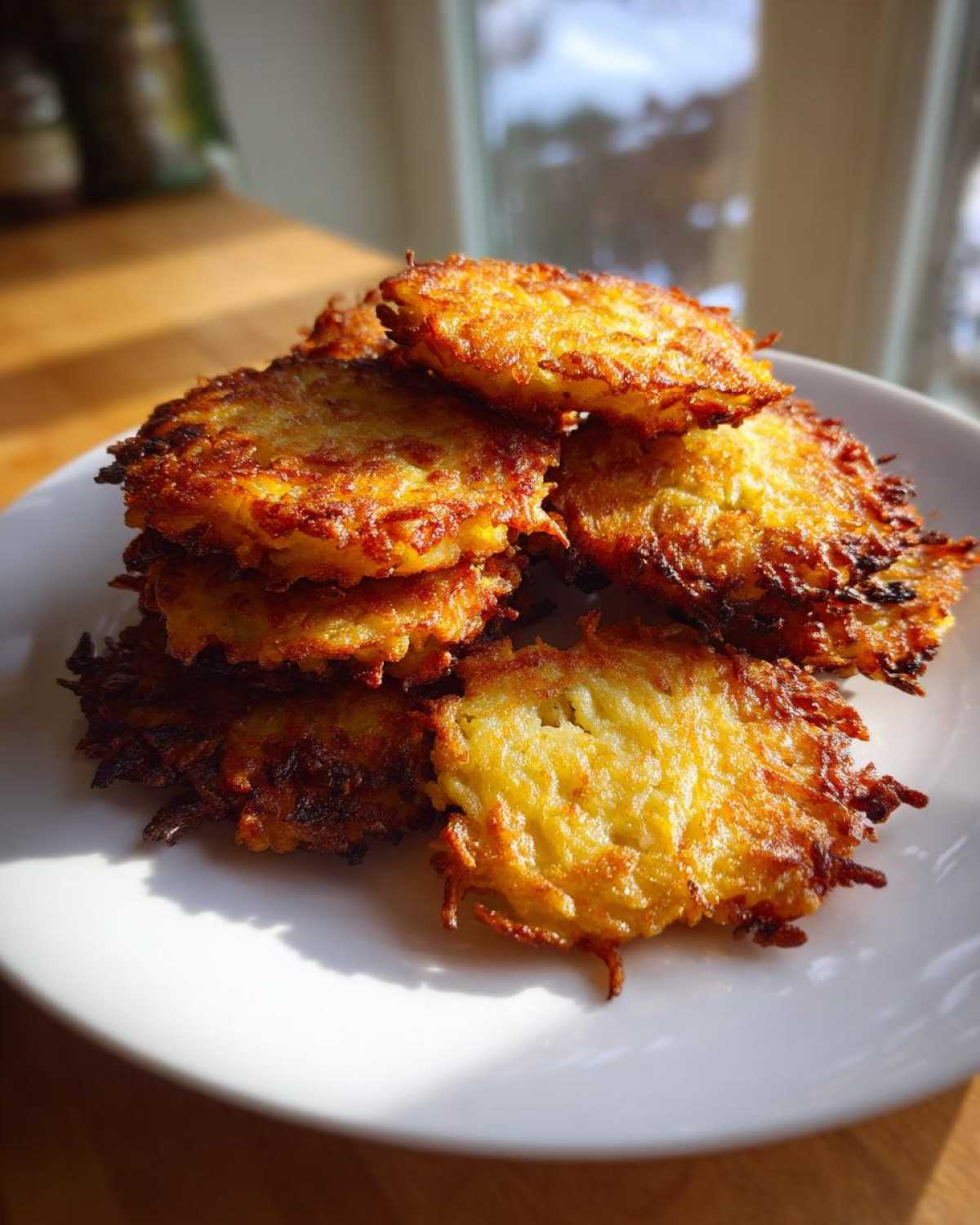
This part determines everything for how to make crispy latkes. Take about a heaping tablespoon of the batter and gently drop it into that hot oil. I use the back of my spoon right away to gently press the mound down a bit, making it thinner—thin equals crispier, every time. Don’t ever crowd your pan! If you try to fit too many in there, the oil temperature drops instantly, and guess what? Soggy middles. Let them fry undisturbed for 3 to 5 minutes until the edges are deeply golden and looking delicate and crispy. Flip them over carefully and cook the second side until it matches the first. When they come out, skip the paper towels if you can help it; drain them straight onto a wire rack set over a baking sheet! That keeps air circulating underneath so the bottoms don’t steam themselves soggy.
Serving Suggestions for Your Classic Latkes Side Dish Idea
Now that you have these perfect, mouthwatering potato fritters, what do you serve them with? Honestly, you can’t go wrong with a simple dollop of ice-cold sour cream—it cuts right through that savory fried flavor. And of course, for that perfect sweet-and-salty balance, you need applesauce. I love serving these as a latkes side dish idea for dinner, not just the holidays! Try stacking two small latkes and topping them with a little smoked salmon and dill cream cheese. It turns this humble pancake into a beautiful appetizer or light meal. You have so much freedom here, but my go-to is always the classic pairing.
Keeping Potato Latkes Warm Until Serving Time
This is the actual game-changer when you’re cooking for a crowd. Don’t stack your finished latkes on a plate, because the steam gets trapped and they deflate! Instead, you need a wire rack set over a baking sheet. Pop the finished, drained latkes onto the rack and slide the whole thing into an oven set really low—think 200 degrees Fahrenheit. They’ll stay piping hot, and better yet, they stay crispy while you finish the rest of the batch. This simple trick prevents the whole batch from turning soft on you!
Storage and Reheating Instructions for Leftover Potato Latkes
Sometimes we just can’t eat twelve perfect potato latkes in one sitting, right? If you have leftovers, the key is making sure you don’t ruin that fantastic crispiness we worked so hard for! When cooling completely, lay them in a single layer on a plate first, then transfer them to an airtight container with a layer of paper towel in between each layer. Don’t try to stack them right away, or they’ll steam themselves soft. Keep them in the fridge for up to three days.
The next day, you absolutely must reheat them using dry heat. Never, ever put these in the microwave—it turns them instantly chewy! Pop your leftover potato latkes onto a wire rack set over a baking sheet and heat them in a 400-degree oven for about 8 to 10 minutes. If you have an air fryer, that’s even better; five minutes at 375 degrees re-crisps them beautifully. They’ll taste almost as good as freshly fried!
Frequently Asked Questions About Traditional Jewish Latkes
Can I really make this an easy latke recipe if I use a food processor?
Yes, you absolutely can speed things up with the food processor! Using that coarse grating attachment is nearly as good as hand grating. Just be careful not to over-process it! Remember, if you turn the potatoes into mush instead of shreds, you’ll lose that amazing texture we are going for. It’s all about short pulses until it’s nicely shredded, not totally pureed.
What does it mean if my latke batter turns watery quickly?
That sad, soupy mess almost always means you didn’t squeeze hard enough during the initial moisture extraction! Or, sometimes, if you grate your potatoes way ahead of time, they start releasing liquid again. If this happens after mixing, quickly grab a few tablespoons of flour and stir it in, then fry immediately. But remember, the best potato grating technique for latkes is to grate and squeeze right before you mix the eggs in.
My latkes taste a little bitter—what went wrong?
That bitterness usually comes from the onion sitting too long with the potato or, more often, the oil being too cool when you started frying. If the oil isn’t hot enough, the potato soaks up all that fat instead of crisping, and it can create a dull, almost bitter taste right off the bat. We want 350°F oil; if it smells heavily of oil when you drop the first one in instead of sizzling aggressively, let it heat up more!
Can I prepare this dough the night before?
I really advise against making the full batter mixture the night before. The baking soda in the flour can react, and the potatoes just get sad. If you absolutely must prep ahead, grate and squeeze your potatoes and onions, wrap them tightly, and keep them in the fridge. The next morning, drain off any liquid that collected, then mix in your eggs, flour, and spices right before frying. That way, you still get that fresh crunch!
Is there a trick to getting the perfect brown color?
Color comes from heat management! If your heat is too low, you get pale pancakes that are greasy. If it’s too high, you get black spots on the edges and raw centers. You want that steady medium-high heat that keeps the oil shimmering but not smoking furiously. The starch in the potatoes caramelizes beautifully when the heat is correct, leading to that gorgeous, uniform, deep gold color we all love. We detail this timing in our full disclaimer policy over here: you can read our testing notes.
Estimated Nutritional Data for Potato Latkes
Now, I’m no nutritionist, and you know I bake based on taste first, but I always like to give folks an idea of what they’re diving into with these fried potato fritters. Since they are pan-fried and made mostly from starchy potatoes, they do pack a punch! Based on what we use in this recipe, a single latke comes out to roughly 110 calories. The main players are the fat from the oil we use for frying—around 6 grams—and about 12 grams of carbohydrates. We get a little bit of protein in there, about 2 grams per pancake. Please remember these are just estimates because the exact oil absorption changes based on how thin you flatten them!
Share Your Mouthwatering Potato Fritters Experience
Whew, we made it! I truly hope you found this deep dive into making undeniably crispy latkes helpful. Now, I absolutely need to know how they turned out for you! Did you achieve that perfect shatter when you bit into them? Please drop a comment below and tell me how your frying went—honest feedback, even about your struggles, helps me learn too!
If you snapped a picture of your golden brown potato pancakes, tag me on social media! Seeing your beautiful results makes all my kitchen chaos completely worth it. Happy frying, friends!
PrintUltimate Crispy Classic Potato Latkes (The No-Soggy Method)

Follow this method to make perfectly golden, undeniably crispy potato latkes every time by focusing on proper moisture removal.
- Prep Time: 20 min
- Cook Time: 25 min
- Total Time: 45 min
- Yield: About 12 latkes
- Category: Side Dish
- Method: Pan Frying
- Cuisine: Jewish
- Diet: Vegetarian
Ingredients
- 3 large Russet potatoes (about 1.5 lbs)
- 1 medium yellow onion
- 2 large eggs, lightly beaten
- 1/4 cup all-purpose flour
- 1 teaspoon salt
- 1/4 teaspoon black pepper
- Vegetable oil or canola oil, for frying (about 1/2 inch deep in pan)
Instructions
- Peel the potatoes and the onion. Grate them using the large holes of a box grater or the coarse setting on a food processor.
- Place the grated potato and onion mixture into a clean kitchen towel or several layers of cheesecloth. Gather the edges and twist tightly over the sink to squeeze out as much liquid as possible. This step is critical for crispiness.
- Transfer the dried potato and onion mixture to a medium bowl.
- Add the beaten eggs, flour, salt, and pepper to the bowl. Mix quickly with a fork until just combined. Do not overmix, as this can cause the mixture to become watery.
- Heat about 1/2 inch of oil in a large, heavy-bottomed skillet over medium-high heat until the oil shimmers (about 350°F).
- Drop heaping tablespoons of the latke mixture into the hot oil, flattening them slightly with the back of the spoon to form thin pancakes. Work in batches; do not crowd the pan.
- Fry for 3 to 5 minutes per side, until deep golden brown and crisp. Adjust heat as necessary to prevent burning.
- Remove the latkes from the oil and place them immediately on a wire rack set over a baking sheet or on a plate lined with paper towels to drain excess oil.
- Serve immediately while hot.
Notes
- For the crispiest result, use Russet potatoes, as they have the highest starch content.
- If you notice the mixture releasing liquid while you are frying, drain it off before adding more batter to the pan.
- You can keep finished latkes warm in a single layer on a baking sheet in a 200°F oven while you finish frying the remaining batches.
Nutrition
- Serving Size: 1 latke
- Calories: 110
- Sugar: 0.5
- Sodium: 250
- Fat: 6
- Saturated Fat: 1
- Unsaturated Fat: 5
- Trans Fat: 0
- Carbohydrates: 12
- Fiber: 1
- Protein: 2
- Cholesterol: 35